
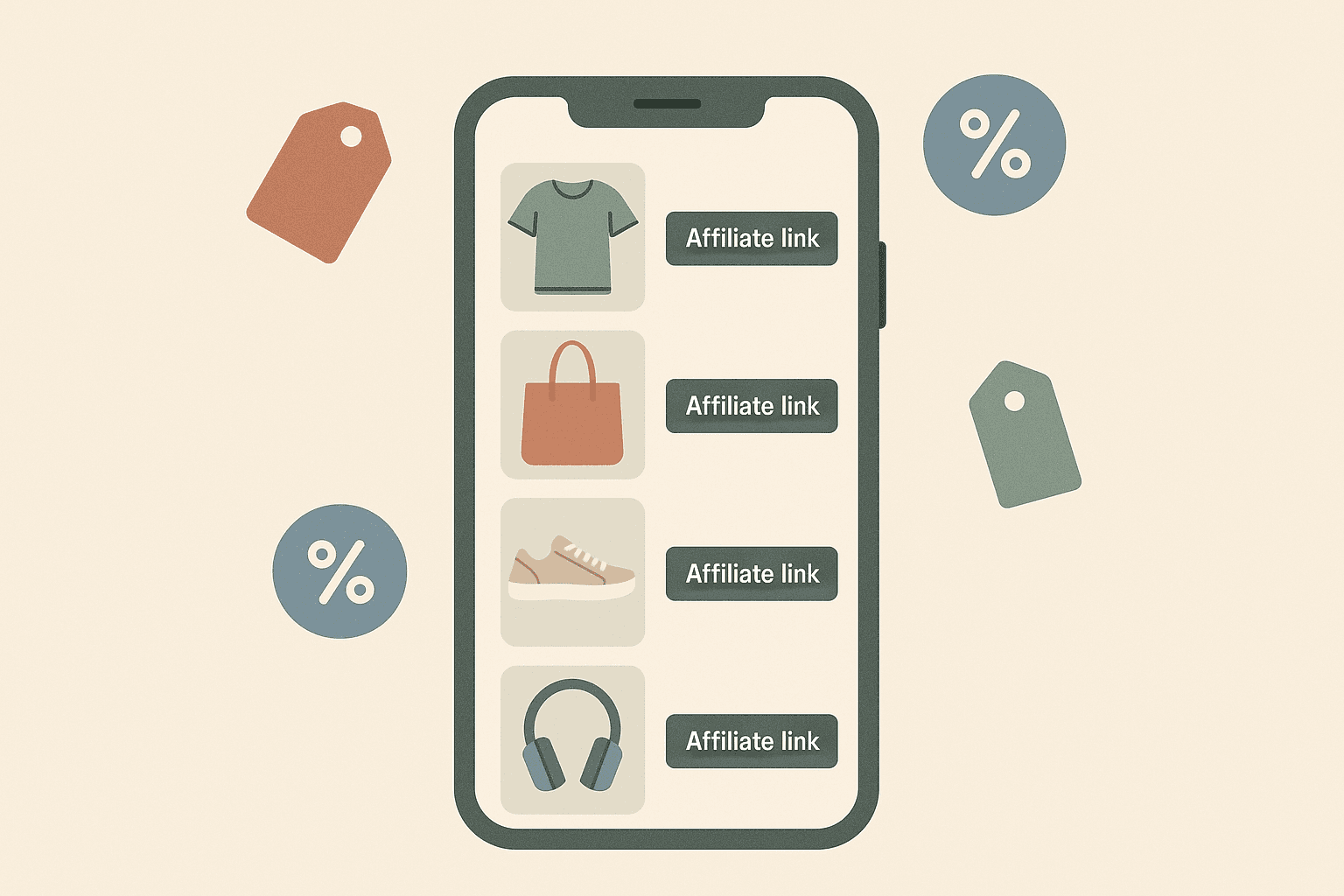
Most "link in bio for affiliate marketers" articles tell you the same five things: list your affiliate links, add a disclosure, organize by category, track clicks, optimize for mobile. That advice is fine for your first 5 affiliate links. It stops working once you have 30+ active affiliate relationships across multiple networks, seasonal campaigns rotating in and out, and a real audience that notices when codes go stale.
This post is for serious affiliate marketers. You're earning real commission income (not just hobby money). You manage relationships across Amazon Associates, ShareASale, Rakuten, Awin, CJ, Impact, and direct brand programs. Your link list has accumulated over time and you don't have a great system for keeping it current. Your audience trusts your recommendations, which means stale codes and broken links damage your credibility, not just your conversion rate.
Here's how to actually solve those problems.
TL;DR
An affiliate marketer's link in bio has four operational jobs that generic advice ignores:
- Group links by commission structure or network, not just by topic, so you can prioritize what's actually earning and audit what's not.
- Operationalize FTC disclosure at the bio level, not just in individual posts. The bio is a sales surface and the disclosure has to be visible there.
- Prevent link rot through systematic auditing because affiliate URLs break, programs end, and codes expire. Your audience notices when this happens.
- Handle seasonal and campaign rotation without losing the evergreen affiliate income from your back catalog.
Then handle the obvious stuff (latest content, social links, contact). In that order of priority. Operational pain first, conventions second.
If you're just starting affiliate marketing: the four problems below mostly apply once you have 15+ active affiliate relationships earning consistently. If you're at the stage of joining your first few affiliate programs, your bio only needs three things: 5 to 10 strong recommendations with clear FTC disclosure, your top-performing free content, and your email signup. Skip down to "The full structure" section, but don't overbuild yet. Time spent organizing 50 affiliate links you don't have yet is wasted.
The four problems generic advice doesn't address
Problem 1: Topic grouping doesn't surface what's actually earning
The standard advice for organizing affiliate links is to group by topic. Tech reviewers separate "Audio Gear" from "Camera Equipment" from "Software Tools." Wellness creators separate "Skincare" from "Supplements" from "Workout Gear." This is fine for navigation but it ignores the operational reality of affiliate marketing: you have 30+ active programs at different commission rates, different cookie windows, and different conversion patterns, and the topic grouping doesn't surface which links are actually earning.
A camera affiliate paying 2% commission on $200 cameras is contributing meaningfully less than a software affiliate paying 30% recurring commission on $50/month subscriptions, even if both rank similar in your "Tech Tools" topic list. But they're sitting next to each other in your bio with equal visibility, getting equal traffic.
The audit gap: most affiliate marketers can't easily answer "which 5 affiliate links earned the most last quarter?" because the link list is organized topically, not by performance.
What to do instead:
A bio organized by commission structure or strategic priority, with topic categories as sub-organization:
- Top earners sub-collection: your highest-converting affiliates regardless of topic. Software subscriptions paying 30% recurring, hosting affiliates paying $100 flat, premium courses paying 40% on first sale. These get top placement on your bio.
- Steady earners sub-collection: reliable middle-tier affiliates that compound over time. Amazon Associates for product reviews, mid-tier affiliate networks. Higher volume, lower per-conversion value.
- Strategic / partnership sub-collection: brands you have direct relationships with, possibly at higher commission rates negotiated individually. These often correlate with sponsored content.
- Topical browsing sub-collections: still organize by topic for visitors who want to browse all your camera recommendations or all your software picks. But this is browsing surface, not the priority surface.
The mechanism that matters most here is unlimited collections with addressable URLs. Bio tools that limit you to a single linear list force everything into the same flat surface. Tools with unlimited collections let you build the dual-axis structure (priority + topic) without redundancy.
A specific pattern that works: rotate your "Top earners" sub-collection quarterly based on actual performance data from your affiliate dashboards. The links that earned the most last quarter get top placement next quarter. Underperforming links drop out or get reorganized into the steady tier.
Problem 2: FTC disclosure on the bio itself, not just in posts
The FTC requires affiliate marketers to disclose financial relationships clearly and conspicuously. Most affiliate marketers handle this in individual social media posts (#ad, #affiliate, "this post contains affiliate links"). They forget that the bio link itself is a sales surface and the disclosure has to be there too.
If you have 50+ affiliate links on your bio page and no disclosure, you have a compliance problem. "I disclose in individual posts" doesn't transfer to the bio page, which is its own sales surface that visitors arrive at directly from social profiles.
The FTC's enforcement on bio-level affiliate disclosure has been increasing as bio links became sales destinations. In 2024 and 2025, multiple settlements specifically called out bio pages with insufficient disclosure as part of broader violations.
What to do instead:
Disclosure handled at three layers, all visible to visitors:
- Bio header disclosure: A clear, visible statement at the top of your bio page. Something like "This page contains affiliate links. I earn commission on purchases made through these links at no additional cost to you. I only recommend products I've actually used." Visible above the fold without scrolling.
- Per-link disclosure for high-stakes recommendations: When you're recommending something with high price points (software subscriptions, courses over $500, services), include "Affiliate link" tag on that specific link card.
- Dedicated disclosure page linked from your bio footer: longer-form explanation of how you handle affiliate relationships, what programs you participate in, how you choose products to recommend. This page satisfies FTC's "clear and conspicuous" standard for sophisticated audiences.
Generic link in bio tools handle this poorly. Most don't have native disclosure features; you have to add it as a manually-styled text block. A bio tool that supports text blocks, custom layouts, and persistent header content makes this easier.
The trust signal matters. Affiliate marketers with good disclosure build long-term audience trust; those who hide affiliate relationships get caught and lose audience faster than they realize. Done well, disclosure can actually improve conversion (audiences trust transparent recommendations more than hidden ones).
Problem 3: Link rot is a credibility tax
Affiliate links break. Programs end. Codes expire. URLs change. Companies pivot. And most affiliate marketers don't audit regularly because the work is tedious and the immediate cost of a broken link feels small.
The hidden cost is significant. A broken affiliate link costs you the commission on whatever that visitor would have bought. Worse, it signals to the audience that the bio page is stale, which damages trust on every other recommendation. A visitor who clicks two broken links in a row stops trusting the third. Stale recommendations also rank lower in search and social algorithm signals because user behavior signals (bounce, low engagement) get logged.
The 30-affiliate bio that hasn't been audited in 6 months probably has 5 to 7 broken or stale links. That's a 17 to 23% credibility tax compounding over time.
What to do instead:
Systematic auditing on a real cadence:
- Quarterly link audit minimum. Click every link in your bio. Verify each one goes where it should. Check that each affiliate code is still active. Replace broken links or remove the recommendation entirely.
- Higher cadence for high-traffic bios. If you have over 5,000 monthly visitors hitting your bio, audit monthly. Higher traffic means broken links cost you more.
- Link health monitoring. Some bio tools and standalone services (Linklytics, link checkers) can monitor your link list and alert you when one returns errors. Worth setting up if your link count is meaningful.
- Performance audit alongside link audit. While you're checking links, look at performance data. Underperforming affiliates either need rework (better placement, better context) or removal. Don't keep dead weight.
A specific pattern: schedule the quarterly audit on your calendar as a recurring event. It takes 1 to 2 hours for a 30-affiliate bio. Not glamorous work but multiplicatively valuable.
The mechanism that matters here is easy editing and visible feedback. Bio tools that make editing painful (deeply nested menus, no bulk operations, slow saves) are why most affiliate marketers don't audit. Tools with fast editing, clear analytics, and search across links reduce the friction.
Problem 4: Seasonal campaigns vs evergreen affiliate income
Affiliate marketing has two flavors of income. Evergreen affiliates (Amazon Associates on a popular product, software subscriptions, hosting recommendations) earn consistently for years if you keep the link working. Seasonal campaigns (Black Friday deals, holiday gift guides, summer collections, back-to-school, brand-specific limited-time codes) earn intensively for weeks then go dormant.
The standard mistake: putting both into the same flat bio list. Seasonal links clutter your bio when they're inactive (a "Black Friday Special" tile in March is dead weight). Evergreen links get crowded out when seasonal campaigns dominate the bio (your reliable monthly software affiliate gets buried under holiday promotions).
The fix isn't to constantly rebuild your bio. The fix is to have separate surfaces that you can rotate independently.
What to do instead:
Two-track bio architecture:
- Permanent bio: evergreen affiliates, top earners, your highest-credibility recommendations. Stable, audited quarterly, slow-changing. This is what visitors who know your work expect to see.
- Active campaign sub-collection: Black Friday, holiday gift guide, brand seasonal campaign. Time-bound, removed when the campaign ends. Linked from the permanent bio with a "Current campaign" or "Limited time" callout that goes dormant when no campaign is active.
When a seasonal campaign launches, you're updating one surface (the active campaign sub-collection), not rebuilding your whole bio. When the campaign ends, you remove or archive the campaign collection without touching the permanent bio.
The mechanism here is collection redirects. Publish links.yourname.com/deals once. Update where it redirects when seasonal campaigns shift. Your bio always shows "Current deals" with the same URL; the destination updates as campaigns rotate. No bio reconstruction required per campaign.
This pattern is the difference between affiliate marketing as continuous editorial work and affiliate marketing as periodic campaign launches. The architecture supports both.
The full structure for an affiliate marketer's bio page
Now that the four problems have answers, here's the full layout. Top to bottom in priority order:
1. FTC disclosure header "This page contains affiliate links. I earn commission on purchases at no cost to you. I only recommend products I've actually used." Above the fold.
2. Active campaign / current deals Sub-collection link to whatever's currently running. Goes dormant when no active campaign.
3. Top earners Your highest-converting affiliates. Strategic placement, prominent visibility.
4. Latest content Most recent blog post, video, or newsletter that drives affiliate traffic.
5. Topic browsing Sub-collections by topic for visitors who want to browse all your camera or software or skincare picks. Each sub-collection is its own surface.
6. Free resources Lead magnets, free guides, content that builds list. Even affiliate marketers should have non-affiliate content.
7. Newsletter / email signup Your owned audience layer. Affiliate income depends on audience trust; building an email list compounds that trust.
8. About / disclosure detail Brief bio with credibility markers. Link to dedicated disclosure page.
9. Brand partnerships / contact For brands wanting to set up direct affiliate relationships or sponsored content.
10. Social and elsewhere Below the fold. Twitter/X, Instagram, TikTok, LinkedIn.
A subtle but important point: the affiliate marketer's bio is editorial work, not setup-and-forget. Top earners shift quarterly based on performance data. Active campaigns rotate with the calendar. Topic browsing grows as you add new recommendations. Quarterly audits keep link rot in check. Affiliate marketers who treat the bio as living see meaningfully better long-term performance than those who set it up once.
What most link in bio tools get wrong for affiliate marketers
The category was built for influencers consolidating links, not for affiliate marketers managing 30+ commission relationships. The gaps:
- Linktree: Built for the "single bio page with a list of links" pattern. No native affiliate disclosure features. No commission-aware grouping. No performance-based reorganization. The Pro tier at $15/month gives you analytics but not affiliate-specific tooling.
- Beacons: Better for creator monetization than Linktree but the bio surface is still flat-list-shaped. No native affiliate disclosure. Some commerce features but oriented toward your own products, not affiliate relationships.
- Stan Store: Built for selling your own digital products, not for managing affiliate portfolios. The storefront layout doesn't fit affiliate marketing's link-density needs.
- Carrd: A one-page website builder; you can manually build an affiliate page but it's not designed for affiliate-specific operational needs.
- DotMe: Markets itself for affiliate marketers; offers affiliate-specific integrations and product showcases. Worth evaluating if you want a tool built for this use case specifically.
The category gap most serious affiliate marketers hit: a tool that supports unlimited addressable sub-collections (so commission-grouped + topic-grouped + campaign-tracked surfaces work), surfaces affiliate links with rich previews and disclosure tags, has fast editing for quarterly audits, and supports collection redirects for stable URLs across seasonal campaigns.
Where Shelfy fits (and where it doesn't)
Shelfy.Today is a free link-in-bio and link curation tool. For affiliate marketers, it does several things well and a few things not at all. The honest version:
Where Shelfy works for affiliate marketers:
- Unlimited collections on the free plan. Build sub-collections for "Top earners," "Active campaign," "Software & Tools," "Hardware & Gear," "Courses & Resources," and any other organizational axis you need. Each addressable, each linkable from your podcast description, blog posts, or YouTube about page.
- Two public-page layouts (Card view with auto-fetched OG previews, and List view). Card view turns each affiliate recommendation into a rich visual tile automatically, fetching cover images and descriptions from each linked URL. For affiliate marketers this means visitors see what they're clicking before they click, which improves conversion and trust. List view gives the dense-information format for visitors browsing larger collections.
- Collection redirects are useful for affiliate-specific patterns. Publish
links.yourname.com/dealsonce across your social bios, podcast descriptions, and email footer. Update where it redirects when seasonal campaigns rotate. The audience-facing URL never changes; the destination does. - Free custom domains. Brand independence matters as you scale. Backlinks to
linktr.ee/yournamebuild Linktree's authority; backlinks tolinks.yourname.combuild yours. - Community voting. Audience upvotes which affiliate recommendations they value most. The order reorders around audience signal. Useful for ongoing curation: visitors tell you which affiliates resonate, and you double down on those.
- Follow + notify. Visitors subscribe to your collection and get notified when you add new recommendations. Builds an off-platform audience layer that's resistant to algorithm changes.
- Real REST API with bulk import. If you maintain affiliate links in a spreadsheet (most serious affiliate marketers do), you can sync from there to your bio. 1,000 requests per hour, bulk import for entire collections in one call. Eliminates manual maintenance.
- Click analytics on free. See which affiliate links actually drive traffic, which ones get ignored, where to prioritize during your quarterly audit.
Where Shelfy doesn't fit:
- No native FTC disclosure features. You add your disclosure as a custom text block at the top of your bio. Most tools require this; none currently have automatic affiliate-disclosure tagging.
- No commission tracking integration. Shelfy tracks clicks but doesn't connect to your affiliate network dashboards (ShareASale, Rakuten, Amazon Associates, etc.) to surface earned commission per link. You'd cross-reference your bio analytics with affiliate dashboard data manually.
- No native discount code management. If you negotiate brand-specific discount codes with affiliate partners, you'd surface those in the link description manually rather than via a code-management feature.
- No automatic link health monitoring. You'd use a separate service (or manual quarterly audits) to detect broken affiliate links.
The clean recommendation: use Shelfy as the audience-facing organized affiliate bio, with its commission-grouped sub-collections and quarterly audit cadence. Pair with a spreadsheet (or your affiliate network dashboards) for the performance data layer. Combined cost: $0 for Shelfy. Most affiliate marketers don't need to spend on bio tools when free includes what's actually needed.
A reasonable objection: "DotMe and similar tools market themselves specifically for affiliate marketers. Why use a general-purpose tool?"
The affiliate-marketer-specific tools (DotMe, some others) offer integrations with specific affiliate networks and product showcase widgets. They can be useful if you primarily use one or two networks they integrate with. For affiliate marketers managing diverse portfolios across many networks, the integration value is partial; a general-purpose tool with strong organization features (like Shelfy) often serves better than a specialized tool with selective integrations.
Already convinced? Shelfy is free forever, every feature included. Try it now
Or keep reading for the worked example, common mistakes, and FAQs.
A worked example: what this looks like in practice
Take a fictional affiliate marketer, Ben Okafor (curator behind "Indie Stack," 32K YouTube subscribers reviewing software and developer tools). His bio at links.indiestack.com would have:
- Top, FTC disclosure: "This page contains affiliate links. I earn commission on purchases at no extra cost. I only recommend tools I've used in my own workflow."
- Active campaign: "Q4 software deals: 30% off [tool], extended trial on [other tool]" (links to active campaign sub-collection, dormant when no campaign)
- Top earners: Software subscriptions paying recurring commission, his highest-converting picks. Updated quarterly based on actual data.
- Latest content: Most recent YouTube video and newsletter issue
- Topic browsing: "Developer tools," "No-code tools," "Productivity & writing," "Hosting & infrastructure," each with sub-collections
- Free resources: "Best free dev tools 2026" guide (lead magnet), email newsletter signup
- About / disclosure detail: Brief bio, link to detailed affiliate-relationship disclosure page
- Brand partnerships: Direct contact for brands wanting to set up affiliate relationships
- Social: YouTube, Twitter/X, LinkedIn
The structure takes 4 to 6 hours to set up initially and roughly 1 to 2 hours per quarter to maintain (mostly the audit). Active campaign sub-collection updates per campaign cycle. Top earners reorder quarterly based on performance data. Topic browsing sub-collections grow as new recommendations get added.
A specific feature to highlight: the active campaign uses Shelfy's collection redirect. Ben's YouTube video descriptions say "Current deals: links.indiestack.com/deals". That URL is a Shelfy redirect. Today it points to Q4 software promotions. After Q4 ends, Ben updates the redirect to point at "Q1 winter restock" or to the dormant landing if no campaign is active. Old YouTube descriptions don't change. The single URL serves whatever's current.
Common mistakes to avoid
A few patterns that hurt affiliate-marketer bio pages specifically:
No FTC disclosure on the bio itself. This is a compliance issue, not just a best practice. The bio page is a sales surface; disclosure has to be there. Disclosure in individual posts doesn't transfer to the bio.
Treating all affiliates as equivalent in the bio layout. A 2% commission Amazon affiliate doesn't deserve the same prominence as a 30% recurring software affiliate. Surface what's actually earning.
Skipping the quarterly link audit. Broken links cost you compounding credibility. The "I'll get to it eventually" audit happens after the audience has noticed and stopped trusting your recommendations.
Letting seasonal campaigns clutter the permanent bio. A "Black Friday Special" tile in March signals neglect. Use a separate active-campaign sub-collection that goes dormant outside campaign windows.
Not tracking which affiliates actually earn. Without quarterly performance audits cross-referenced with your affiliate dashboards, you're guessing. You'll keep promoting low earners while underweighting high earners.
Burying the lead magnet. Your email list is your most resilient asset against algorithm changes. Affiliate income on top of an email list is more durable than affiliate income from social traffic alone.
No disclosure on high-stakes recommendations. When you recommend a $500+ course or a $99/month software, having a "Affiliate link" tag on that specific link card is good practice beyond the header disclosure. Build trust through transparency.
Treating the bio as setup-and-forget. Affiliate marketing rewards continuous editorial work. The bio that gets quarterly attention compounds value; the bio that doesn't decays steadily.
Try Shelfy free for your affiliate work
If the operational problems above sound familiar (commission-blind organization, weak disclosure, link rot, seasonal vs evergreen confusion), Shelfy is free forever, every feature included.
Build your affiliate marketer bio in 15 minutes
If you're weighing tools, the Shelfy vs Linktree comparison, Shelfy vs Beacons comparison, and Shelfy vs Stan Store comparison cover alternatives in detail. If you also sell your own courses or digital products alongside your affiliate work, see Link in Bio for Course Creators for the operational overlap. For background on why Linktree's pricing keeps rising, why Linktree is so expensive has the full analysis.
Frequently asked questions
Do I have to disclose affiliate relationships in my bio? Yes, in the United States. The FTC requires "clear and conspicuous" disclosure of affiliate relationships at any sales surface, and your bio link is a sales surface. Disclosure in individual posts doesn't transfer to the bio. Place a clear statement at the top of your bio page (visible without scrolling) that explains you have affiliate relationships and what that means for visitors.
What's the right way to word an affiliate disclosure? Plain language works best. Something like: "This page contains affiliate links. I earn commission on purchases made through these links at no additional cost to you. I only recommend products I've actually used." Avoid jargon like "monetized links" or hedging like "may contain." Be direct.
How do I handle multiple affiliate networks (Amazon, ShareASale, Rakuten, etc.)? Each affiliate network has different requirements and different commission structures. Your bio should organize by what's earning, not by which network it came from. Group "Top earners" together regardless of network. Use sub-collections for topic browsing where visitors can find recommendations by category. Maintain a spreadsheet for the actual commission tracking; don't try to surface every network's data in your bio.
Should I link to my affiliate URL directly or use a link shortener? Direct affiliate URLs work best. Link shorteners can break tracking, get blocked by browsers and email clients, and look suspicious to careful audiences. Use direct URLs and let your bio tool handle visual presentation through previews rather than masking the URL.
What's the right cadence for auditing my affiliate links? Quarterly minimum. Click every link, verify it goes where it should, replace broken ones, remove dead programs. If you have high traffic (5,000+ monthly bio visitors), audit monthly. Cross-reference with affiliate dashboard performance data so you can also reorder based on what's earning.
Can I just use my YouTube channel header links instead of a bio link tool? Not really. YouTube's channel header supports a small number of links (typically capped at 5 to 7) with no organization. For affiliate marketers managing 30+ relationships, you need a dedicated bio surface. YouTube channel header links work for the basics; the bio link handles the depth.
Is community voting useful for affiliate marketers? Yes, particularly for evergreen recommendations. When visitors upvote which software, hardware, or resources they find most valuable, you get a real signal about audience preference that's stronger than just click data. Use the voting signal to inform what to feature, what to write more about, and what's earning trust.
Can I use Shelfy if I'm already on a different affiliate-focused tool like DotMe? Yes. Migration is straightforward: set up a custom domain on Shelfy (free), recreate your link structure as proper sub-collections (use this as a chance to organize), update your social bios and content descriptions to the new URL. If you have specific affiliate-network integrations on DotMe that you rely on, evaluate whether you actually use them; many affiliate marketers find they prefer a general-purpose tool with strong organization to a specialized tool with selective integrations.
How do I prevent link rot beyond manual auditing? Set up a recurring calendar event for quarterly audits. Use a link checker service (Linklytics, broken-link-checker.com, or similar) to run automated checks. Track affiliate program emails for any "program ending" or "structure changing" notifications. When affiliate networks shut down or merge (which happens), update your bio immediately rather than letting the broken link sit.
Last reviewed: May 2026. Affiliate program structures, FTC guidelines, and individual network terms change regularly. Verify current requirements before publishing strategic decisions.